
New Delhi – Raipur – Kanha – Bandhavgarh – Jabalpur – New Delhi – Agra – Jaipur – New Delhi – Fly Back
Discover the perfect blend of India’s wildlife and cultural treasures on this 13-day journey. Start in the bustling city of New Delhi before flying to Raipur and venturing into the jungles of Kanha National Park and Bandhavgarh National Park to spot majestic tigers, leopards, elephants, and other wildlife. Continue to Jabalpur, then explore the iconic landmarks of India’s Golden Triangle: Agra with the Taj Mahal, and the royal palaces of Jaipur, before returning to New Delhi. Ideal for wildlife lovers and culture enthusiasts, this tour offers an unforgettable mix of adventure, nature, and heritage.
Highlights
- Kindly Note: If the intended hotel or normal category of rooms are waitlisted or sold out, we will provide alternative hotels or categories. We will keep you informed about any supplements or reductions involved. Hotel check-in and check-out time is 12:00 PM. Safari zones are subject to forest permissions.
- Note: Please note that the driving hours provided above for travel between cities are based on normal road conditions and may vary. Any stops for food, tea, toilets, or sightseeing along the way will add extra time to the journey. Bandhavgarh has National parks are closed every Wednesday for afternoon jeep safari.
Upon your arrival at the International Airport, our representative will welcome you and arrange your transfer to the hotel. They will provide you with all necessary travel documents and assist you with the check-in process. Enjoy an overnight stay at the hotel in New Delhi.
Begin your day with an early breakfast before transferring to the airport for your morning flight, scheduled to depart at 06:45 AM and arrive in Raipur at 08:35 AM. Upon arrival, you will be greeted and transported to Kanha National Park, a 220-kilometer journey that will take approximately 4 hours.
Once you arrive, check into the lodge. After enjoying lunch, you will embark on an afternoon jeep safari in the national park. Dinner will be served at the lodge, where you will also spend the night

Rise at 05:00 AM for tea or coffee with biscuits before heading out for the morning jeep safari in the National Park.
Kanha National Park spans 940 square kilometers of stunning natural beauty, featuring sal and bamboo forests, rolling grasslands, and meandering streams. Established in 1974 as part of Project Tiger, it forms the core of the Kanha Tiger Reserve. The park is the sole habitat of the rare hardground Barasingha (Cervus Duvaceli Branderi).
This is the original Kipling country, vividly described in his Jungle Book. Enjoy a packed breakfast provided by the lodge, served at a designated spot and spread on the bonnet of the safari vehicle, allowing you to savor your meal amidst the wilderness of Kanha.
Continue your search for the elusive tiger if you haven’t spotted one yet, and soak in the fresh, invigorating environment. Return from the safari around 11:30 AM. Freshen up and enjoy lunch.
In the afternoon, depart for another jeep safari in Kanha National Park. Return from the safari at 6:00 PM, followed by dinner and an overnight stay at the lodge.

Wake up and prepare for another adventurous day in the National Park with a morning safari. The Banjar Valley and Halon Valley form the western and eastern halves of the park. Established as Kanha National Park by special statute in 1955, it has since implemented numerous stringent conservation programs to protect its diverse flora and fauna.
Kanha boasts approximately 38 species of mammals, including the gaur, the world’s largest cattle; the sambar, India’s largest deer; and the chausingha, the only four-horned antelope in the world. Other frequent sightings include the Nilgai antelope, sloth bears, dholes (Indian wild dogs), and occasionally leopards. The park is also home to around 300 bird species, such as storks, egrets, black ibis, raptors, owls, and red-wattled lapwings.
In the afternoon, embark on another jeep safari in Kanha National Park. Return from the safari at 6 PM, followed by dinner and an overnight stay at the lodge.

Embark on a morning jeep safari in the national park. After an early lunch, depart for Bandhavgarh, a journey of 280 kilometers taking approximately 5-6 hours. Upon arrival, check into the lodge. Enjoy dinner and an overnight stay at the lodge.
Enjoy breakfast, lunch, and dinner at the lodge. Participate in both morning and afternoon jeep safaris in the national park.
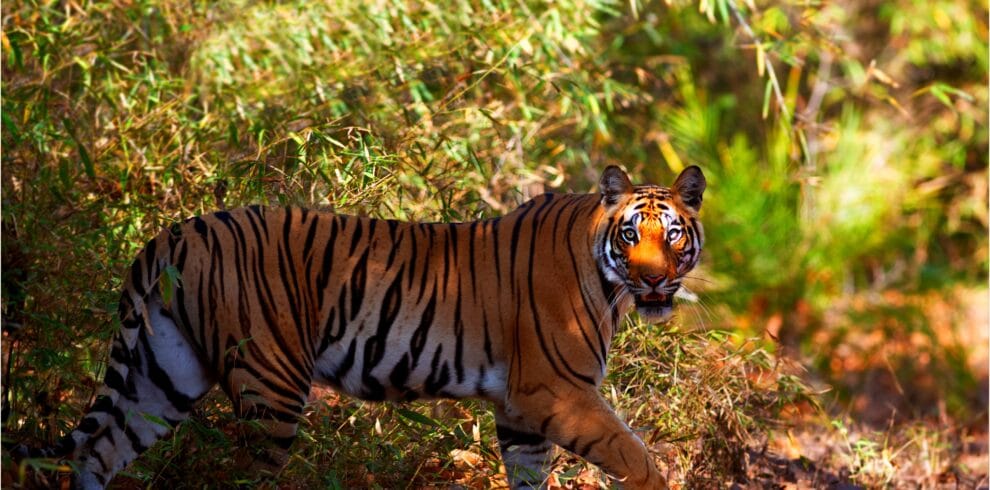
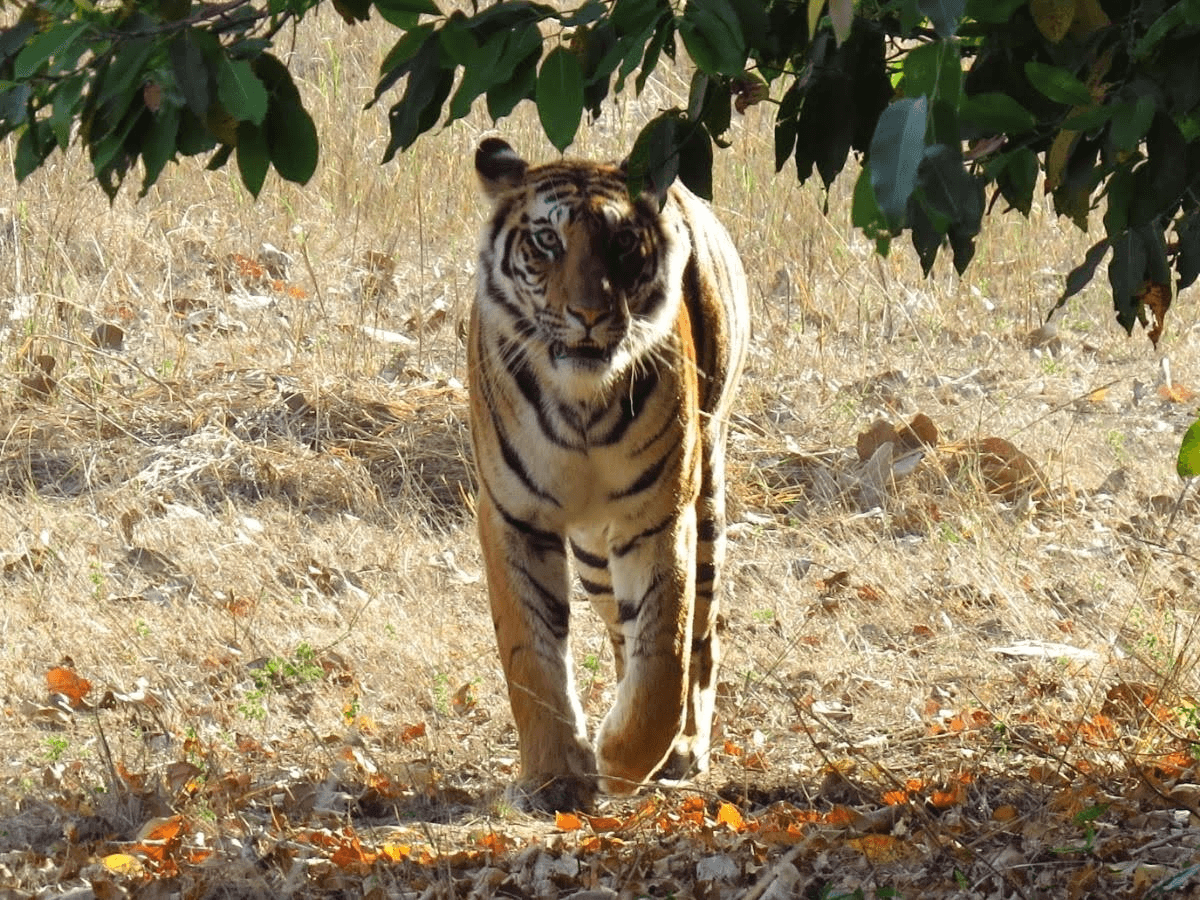
Bandhavgarh: This national park is renowned for its high tiger population density, including the famous White Tigers of Rewa. Other wildlife attractions include leopards, blue bulls, Indian gaur (bison), chausingha (four-horned antelopes), spotted deer, sambar deer, wild boar, sloth bears, foxes, jackals, and wild dogs. The park hosts at least 22 species of mammals and about 250 species of birds.
Additional animals found in Bandhavgarh include the ratel, porcupine, small Indian civet, palm squirrel, lesser bandicoot rat, jungle cat, and the elusive hyena. The reptile population includes cobras, kraits, vipers, rat snakes, pythons, monitor lizards, and turtles. Two primate species, the rhesus macaque and the Hanuman langur, also inhabit the park. Return to the lodge for dinner and an overnight stay.
Enjoy breakfast, lunch, and dinner at the lodge. Participate in morning and afternoon jeep safaris in the national park.
Bandhavgarh: With over 2000 years of human activity and settlement, Bandhavgarh is referenced in ancient texts such as the Narad-Panch Ratra and the Shiva Purana.
The oldest signs of habitation in the park are caves carved into the sandstone to the north of the fort, some containing Brahmi inscriptions dating back to the 1st century B.C. The fort has been ruled by various dynasties, including the Maghas in the 1st century A.D. and the Vakatakas in the 3rd century A.D. Subsequently, the Chandela Kings and other dynasties governed Bandhavgarh. Over time, the area became deserted and was overtaken by forests, turning into a royal hunting reserve. This status helped preserve the forest and its wildlife, although the Maharajas fully utilized their hunting rights.
Upon India’s independence, Bandhavgarh remained the private property of the Maharaja until he donated it to the state, leading to the establishment of the national park in 1968. After the park’s creation, poaching and hunting were brought under control, leading to a significant rise in the animal population, particularly tigers. The 1986 expansion provided additional forest area to support the growing tiger population.
Return to the lodge for an overnight stay.

Begin the day with a morning jeep safari in the national park. After lunch, transfer to Jabalpur airport for a flight departing at 16:30 hrs, arriving in New Delhi at 18:40 hrs. Upon arrival, transfer to the hotel for an overnight stay.
After a relaxed breakfast, embark on a drive to Agra, covering a distance of 220 kilometers over a 4-hour journey. Upon arrival, check into your hotel. In the evening, visit Mehtab Bagh to witness the sunset over the Taj Mahal. Mehtab Bagh is a charbagh complex located in Agra, North India. Situated north of the Taj Mahal complex and the Agra Fort, it is positioned on the opposite side of the Yamuna River, in the flood plains. This garden complex is square in shape, measuring approximately 300 by 300 meters, and is perfectly aligned with the Taj Mahal on the opposite bank. Enjoy an overnight stay at the hotel in Agra.

At sunrise, begin your day with a visit to the iconic white marble mausoleum, the Taj Mahal. Built in the 17th century by the Mughal emperor Shah Jahan for his wife Mumtaz Mahal, this masterpiece of Mughal architecture is a UNESCO World Heritage Site. Completed in 1652, it took skilled craftsmen from Persia, Turkey, France, and Italy, along with some 20,000 labourers, 17 years to build this magnificent edifice.
After a leisurely breakfast, proceed to visit the red sandstone Agra Fort. Located on the banks of the Yamuna River, this fort is enclosed by imposing 20-meter-high walls, with a 12-meter moat between them. Constructed over time by three successive Mughal emperors – Akbar, Jehangir, and Shah Jahan – the fort showcases a blend of Hindu and Muslim architecture. Please note that the Taj Mahal is closed on Fridays. Check out from the hotel.
Later in the day, drive to Jaipur, covering a distance of 235 kilometres over a 5-hour journey. Upon arrival, check into your hotel and enjoy an overnight stay.
In the morning, embark on an 11-kilometer drive to the outskirts of the city, where you will stop at Jal Mahal before visiting the magnificent Amber Fort, the ancient capital of the State until 1728. Explore the Temple of Kali and the Hall of Victory, also known as Jai Mahal.
Later in the day, visit the Observatory, the Palace of Winds, and the City Palace and Museum. The museum features an intriguing textile section showcasing dresses and costumes worn by the former Maharajas and Maharanis of Jaipur. Jaipur is renowned for its exquisite carpets, enamelled ornaments, precious and semi-precious stones, brass ornaments, and various other arts and crafts.
Spend your evening wandering through the bustling lanes and bylanes of the Pink City, indulging in haggling and souvenir-hunting. Return to the hotel for an overnight stay in Jaipur.

After a leisurely breakfast, begin your journey back to New Delhi, covering a distance of 260 kilometres over a 5-hour drive. Upon arrival, transfer to a hotel near the airport for your convenience.
After breakfast, you will be transferred to the international airport to board your flight back home.
Tour Cost: Inclusions & Exclusions
Tour Cost: Inclusions
- Accommodation in New Delhi, Agra and Jaipur on a bed and breakfast basis.
- Accommodation in Kanha and Bandhavgarh on a room, all meals, and safari basis.
- Entrance and guide charges in Kanha and Bandhavgarh.
- Guide and monument charges in Agra, Jaipur.
- 6 exclusive jeep safaris will be provided in Kanha.
- 5 exclusive jeep safaris will be provided in Bandhavgarh.
- Assistance at the airport and hotels.
- All land transfers in an air-conditioned Vehicles.
- All currently applicable taxes.
Tour Cost: Exclusions
- Still/video camera fee in national parks and monuments
- Expenses of personal nature such as tips, mineral water, soft drinks, cigarettes, liquor, laundry, and telephone calls.
- International and domestic airfare.
- Travel insurance.
- Anything not mentioned in the inclusions.
- Please note that any changes in entrance fees or government taxes will be payable extra, and you will be advised accordingly if applicable.
FAQs
The tour is centered on Hokkaido’s winter wildlife, with a focus on spectacular birding. Key species you can expect to see include Red-crowned Cranes (at Tsurui and Otowa Bridge), Steller’s Sea Eagles (at Lake Toro, Lake Kussharo, and on the Eagle Boat cruise), and the elusive Blakiston’s Fish Owl (at Yuyado Daiichi and Washinoyado). Other highlights include Whooper Swans, Ural Owls, Auks, Cormorants, and Sea Otters (on the Ochiishi Nature Cruise).
The tour utilizes local accommodation (such as Yumekoubou, Yuyado Daiichi, and Pension Papilio) which aligns with the tour’s emphasis on authenticity and intimate lodging over conventional luxury hotels. The accommodation is selected to provide access to the remote natural areas visited.
This experience is unique because it offers a specialized, niche experience focused intensely on Hokkaido’s winter wildlife and remote landscapes. It is a carefully curated blend of spectacular, expert-guided birding opportunities, immersion in the natural environment, and the use of intimate, local lodging, while also providing a light exposure to Japanese cultural elements.